As an osteopath I hear a lot from people about their bodies and their diets. One of the most common things I hear is ‘I know I’ve put on weight’ or ‘I know I really need to lose the extra weight’. This is often said by clients who are limited in how much they can move by a painful body part and since their injury have put on inches at the waist.
As an allied health professional, I can and will use my time with you to help you make better decisions around food. We know diet impacts on heart health through blood pressure, cholesterol and when we gain weight, we put ourselves at higher risk of a raft of health problems we’d rather not have.
In this blog I wanted to share three books that have changed my own habits and helped me to keep the spare tyre at bay.
Book 1: Gut by Giulia Enders
This book taught me about variety and foods that are good for your gut bacteria. It is the reason that pears and artichokes are in my food repertoire and on my shopping list. This wasn’t this book’s greatest gift to me though.
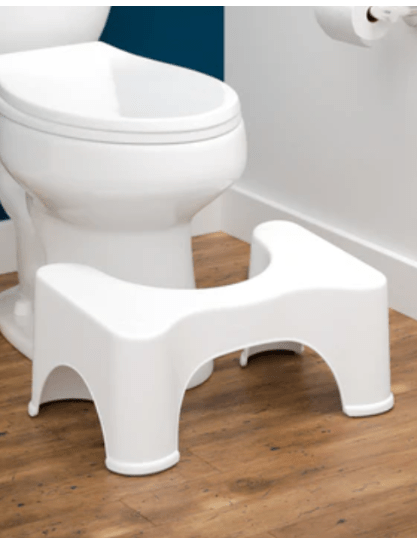
Gut talked about our pooing habits and the link to bowel (colon) cancer. We were designed to squat but our western toilets do not allow us to do this without spoiling our manners.
Since I read Gut I have been the proud owner of a ‘squatty potty’ or pooping stool as it is affectionately known in my house. It allows nature to take it’s course as intended – quickly, efficiently, and with a complete feeling that I miss whenever I am staying away from home without one.
My family are converted and our health is better for it. Thank you Gut!
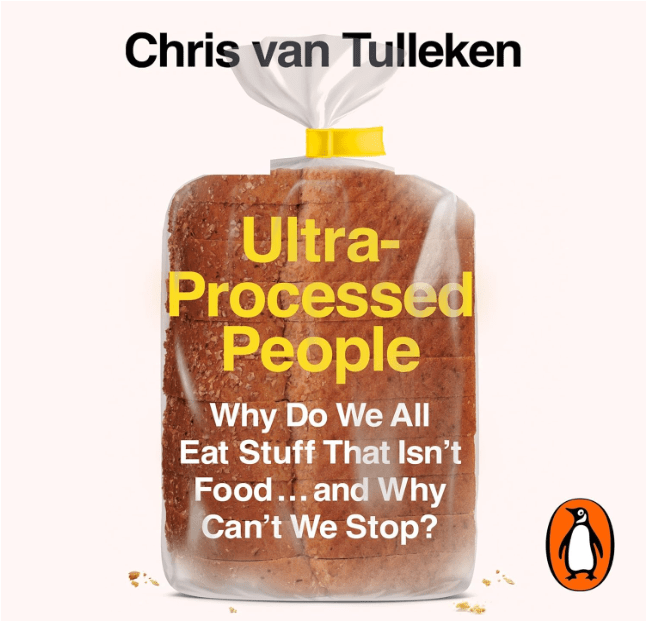
Book 2: Ultra-processed People by Dr Chris van Tulleken
This was a fantastic listen. I cannot claim to be able to read a book cover to cover anymore like I did as a child, but Audible has me covered. Not only was the research in this book backing how toxic this new food is for our health and the environment, it also highlights that we have the ability to know what we need in terms of nutrients.
A fantastic chapter talked about how toddlers, like animals, can know inherently what foods they need for a balanced diet and when given the opportunity to feed themselves from a varied choice of quality foods, can eat themselves out of any deficiency.
What I took from this book was a desire to avoid UPF (ultra-processed food) as much as possible and this has meant a few changes to the weekly shop. I now buy fresh bread rather than any plastic wrapped supermarket bread. I am much better at reading the small print and avoid emulsifiers as a rule. This may mean that I will chose a baked bean brand or mayonnaise brand that doesn’t have gums, stabilisers and emulsifiers in compared to a brand that does. I know I am still buying and eating some UPF, but it is slightly better than what I was blindly buying before.
In October I signed up for Zoe. This was mainly motivated by me wanting to know if I had ‘good gut bacteria’ but also because Davina McCall was selling it and she looks so trim and happy so I clicked buy like the marketing companies wanted me to.
After a lot of money and no more discipline from me than normal – I hate tracking food and have never been able to stick to doing it – I found out that I had excellent gut bacteria (thank you Gut!) My blood fat responses weren’t too bad either but what surprised me was that my blood glucose levels were all over the place and nearly classed as ‘poor’. I had no idea why and because I didn’t track my foods properly whilst doing Zoe, I wasn’t really much wiser.
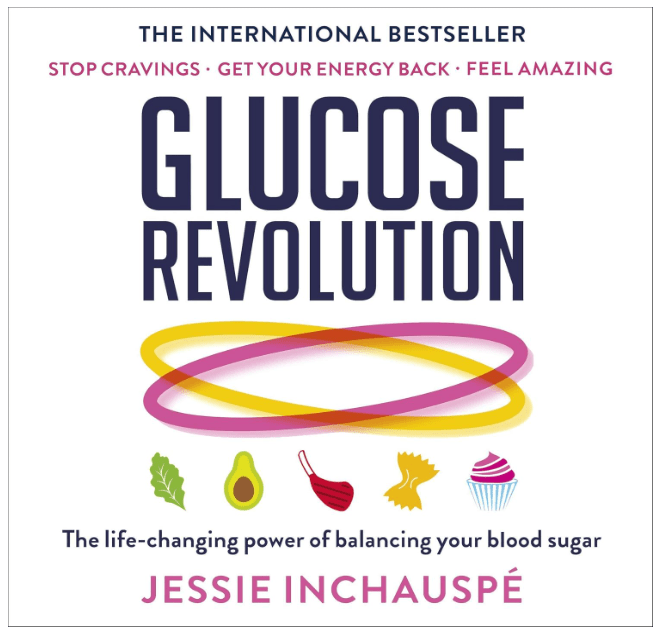
Roll on a few months and whilst on a course to help with women’s health, Glucose Revolution was recommended by the lecturer for any woman with PCOS (poly cystic ovarian syndrome), but also for the rest of us to read too. The promise of flattening my glucose curves, reducing the oxidative stress that is linked with the peaks of a high blood glucose level and ageing, and to wake up feeling amazing was very enticing.
The book definitely delivers. Jesse writes simply, with a clear evidence base, and in a way that means you will remember your ‘hacks’. The ones I am now using daily are to start the day with a savoury breakfast, to eat my veggies first, to eat something sweet immediately after dinner rather than wait for a few hours and to put ‘clothes’ on my carbs. Every now and then I also have some apple cider vinegar before a calorific meal. Safe to say I am feeling better for it, less tired in the mornings and with less bloating. I think I am also the lightest I have been in a while without some kind of stressful life event so it’s a winner!
If you would like help with a painful condition that is stopping you being active or looking after yourself and your family, get in touch on Whatsapp 07706 483 797 or book in below.
Osteopathic medicine is available on almost every continent and is practised in 46 countries worldwide (Bagagiolo, Rosa and Borrelli, 2022). A recent YouGov survey found that 95% of osteopathic patients say they have confidence in osteopaths with 9 in 10 patients also saying their osteopath was ‘excellent’ or ‘very good’ at making them feel at ease (Piggot and Gosschalk, 2018). This is great news for the profession but who are these people seeing an osteopath and why do they choose to see one?
Demographic data on who sees an osteopath is wide ranging. The most common age of people seeing an osteopath is 50-59 years old, but the range reported is from 18 to over 90 years old (Fawkes and Carnes, 2021). Teenagers and children can also see an osteopath and those with paediatric training can assess and treat babies, toddlers and young children. As a profession and depending on training, osteopaths can treat anyone.
Hannah is a member of the Institute of Osteopathy
Women report seeing an osteopath more than men in the UK, and the majority of those seeing an osteopath were employed or retired (Fawkes and Carnes, 2021). Osteopaths can see patients who are insured as well as patients who self-refer or who might have been advised to see an osteopath by another health professional. You do not need a referral to see an osteopath in private practice.
Osteopaths are professionally autonomous which means they can diagnose conditions and refer into NHS primary care or private services.
The most common presenting problem seen in an osteopath’s clinic is low back pain with 55.8% of patients reporting this as their main symptom (Fawkes and Carnes, 2021). The neck is the next most common symptom area followed by the shoulder. Surveys commonly find that patients predominantly see an osteopath for musculoskeletal conditions (in the skeleton, joints and muscles) but osteopathic medicine considers a person’s health and wellbeing to include the balanced functioning of the nervous system and organs (Bagagiolo, Rosa and Borrelli, 2022). So an osteopath will most commonly see backs, necks, shoulders, knees and hips but these are not the only treatment areas.
The least reported symptom area patients would see an osteopath for is the chest. This might be because it is not the main concern or primary symptom area when a person first decides to see an osteopath. I would treat the chest in a treatments because this is where muscles from the front of the shoulder and collarbone attach and it is where the front of the ribs are. Ribs can often be a source of pain or loss of movement in the neck and shoulder. Osteopaths would treat these frequently because good rib movement helps with functional breathing – very important for whole body health and healing.
What do we know about people’s reasons for choosing to see an osteopath?
In Piggot and Gosschalk’s 2018 YouGov survey, confidence in a health professional was determined by whether the professional provides good quality advice and treatment; whether professional has a recognised level of education and training; whether they keep their knowledge and skills up to date and if this is monitored by a regulatory body.
Hannah is a registered osteopath
Osteopaths are professionals regulated by UK law. This means that anyone calling themselves an osteopath must have been educated in a recognised educational institution to degree level, are registered with the General Osteopathic Council (GOsC) and maintain this registration with regular updating of their knowledge, skills and performance.
90.8% of osteopathic patients reported that they were ‘very satisfied’ with their care (Fawkes and Carnes, 2021)
Osteopaths are also allied health professionals (AHPs) alongside 13 other registered professionals such as radiographers, paramedics and physiotherapists. This means that osteopaths are professionally autonomous so can diagnose conditions and refer into NHS primary care or private services (NHS England, 2022).
As AHPs, osteopaths are part of the system-wide access to care that assesses, treats and diagnoses conditions to help prevent disability and improve the health and wellbeing of patients (NHS England, 2022). There is a strategy for AHPs in England spanning 2022-2027 which aims to meet the needs of local communities, reduce health inequalities and improve outcomes for all. Osteopaths are part of that plan.
Allied Health Professionals Infographic, NHS England
Are osteopaths effective at providing personalised care that helps patients return to health?
In Fawkes and Carnes 2021 review of patient reported outcomes, 90.8% of osteopathic patients reported that they were ‘very satisfied’ with their care. Every osteopath is an individual and no two osteopaths will approach a condition in the exact same way. Equally, every individual patient has a different response with different goals and healing times. This makes it difficult to evaluate clinical effectiveness in research studies. In an overview, Bagagiolo, Rosa and Borrelli (2022) found a range of studies in which osteopathic treatment was effective in reducing pain and improving function for low back pain in pregnant and non-pregnant patients, in neck pain, in long-term pain, tension-type headaches, migraines and in IBS. The same authors judged the quality of some of these studies to be poor due to a lack of detailed descriptions of the osteopathic treatment applied, issues with comparing real hands-on treatment to fake hands-on treatment and a low number of agreeing studies (Bagagiolo, Rosa and Borrelli, 2022). There is no easy solution to proving effectiveness of osteopathic treatment in randomised control trials which are deemed robust but are not easily adapted to interventions involving hands on therapies.
In the UK there are 10 million people who have arthritis. This means 1 in 6 people are living with painful, stiff or restricted joints (Versus Arthritis, 2023). This doesn’t just affect someone’s movement and physical activity but also their energy levels, mood and ability to socialise. This is at a time when people could be waiting over a year for access to NHS care, particularly for hip and knee replacements (Versus Athritis, 2023).
Infographic Versus Arthritis
National Institute for Health and Care Excellence (NICE) recommends the manual therapy an osteopath would provide (spinal manipulation, mobilisation, massage) for managing low back pain with or without sciatica alongside exercise (NICE, 2016). Manual therapy is also recommended for osteoarthritis, for example hip and knee osteoarthritis, alongside therapeutic exercise (NICE, 2022).
This is in response to recent evidence supporting the work done by osteopaths and other manual therapists on patients who are waiting for joint replacements. These patients have been better able to manage their pain and physical function with an improved quality of life. NICE have recommended more research on manual therapy with exercise for other osteoarthritis-affected joints (NICE, 2022).
Similar issues found by Bagagiolo, Rosa and Borrelli in trying to measure and research hands on therapy robustly were found by NICE. The effective treatment time agreed by NICE was (on average) 7 weeks or less than 3 months.
Hannah is a member of the National Council for Osteopathic Research (NCOR)
In summary:
Osteopaths are trained to diagnose, manage and treat, all ages from all walks of life
Most people see an osteopath for pain or injuries to their joints, muscles, tendon, ligaments
The most common reasons for seeing an osteopath are for back, neck and shoulder pain but…
Osteopaths will also consider the health of your nervous system and your organs in helping you to move better or manage your pain
Patients trust osteopaths and satisfaction with their osteopathic care is high
By UK law, Osteopaths must be educated to degree-level, must be registered with the GOsC and must stay up to date with their knowledge, skills and performance according to agreed professional standards
NICE guidelines recommend considering treatments and advice that osteopaths provide for low back pain with and without sciatica and for osteoarthritis of the hip and/or knee
NICE recommends more research into the effectiveness of hands on therapy and advice that osteopaths provide for other joints affected by osteoarthritis
It is difficult to measure the effectiveness of hands on therapy like osteopathy in robust clinical research.
Osteopathic hands-on treatment has been found to reduce pain and improve physical function.
Bagagiolo, D., Rosa, D. and Borrelli, F. (2022) ‘Efficacy and safety of osteopathic manipulative treatment: An overview of systematic reviews’, BMJ Open, 12(4). doi:10.1136/bmjopen-2021-053468
Fawkes, C. and Carnes, D. (2021) ‘Patient reported outcomes in a large cohort of patients receiving osteopathic care in the United Kingdom’, PLOS ONE, 16(4). doi:10.1371/journal.pone.0249719
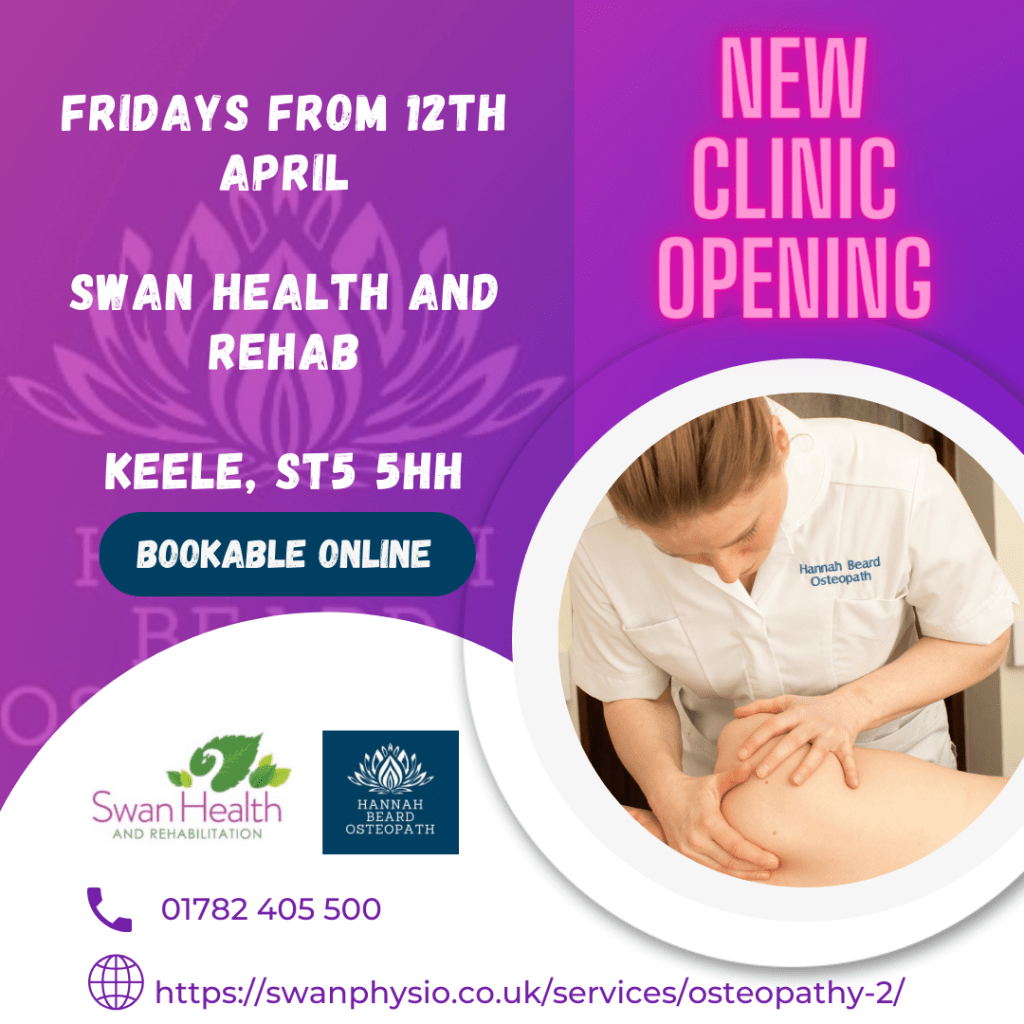
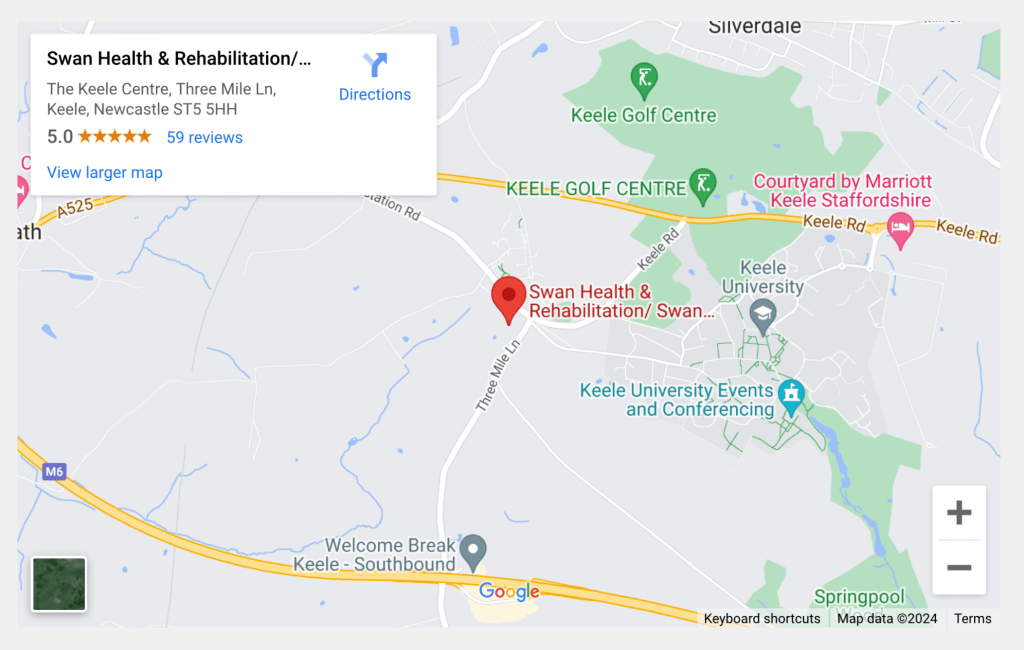
Visit Swan Health & Rehabilitation Ltd / Swan Physio The Keele Centre Three Mile Lane Keele Newcastle-Under-Lyme Staffordshire ST5 5HH
Hannah can treat a range of problems with a variety of approaches suited to your body and your preferences:-
Arthritic pain Circulatory problems Cramp Digestion problems Fibromyalgia Frozen shoulder/ shoulder and elbow pain/ tennis elbow Headache arising from the neck (cervicogenic) Joint pains Joint pains including hip and knee pain from osteoarthritis General, acute & chronic backache, back pain Generalised aches and pains Migraine prevention Minor sports injuries Muscle spasms Neuralgia or nerve pain Tension and inability to relax Rheumatic pain or pain due to inflammation Sciatica Neck pain
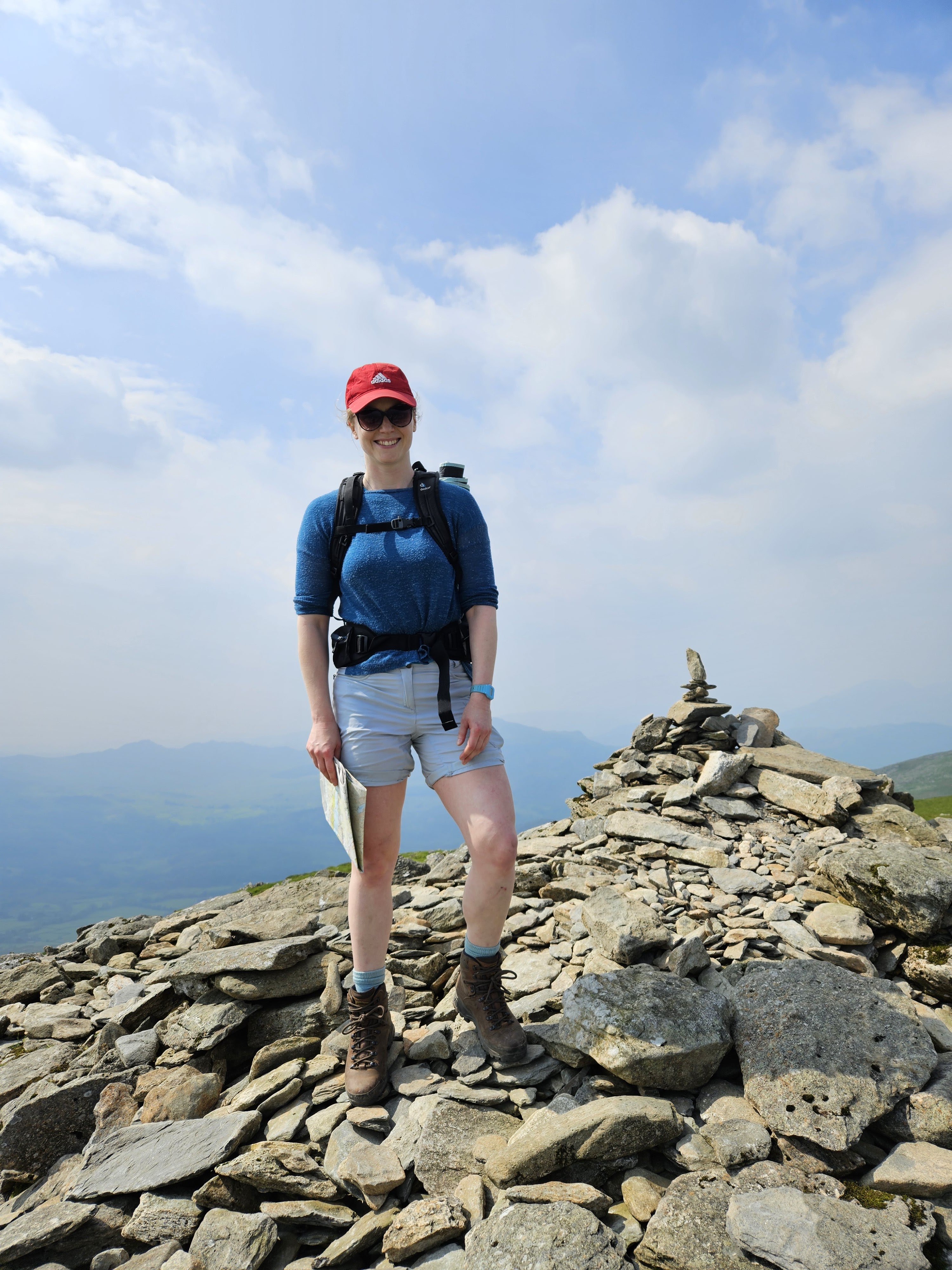
As a rugby player and osteopath, Hannah is interested helping people who have ongoing problems after concussion such as headaches, neck pain or brain fog.
Contact her to find out if you might be suitable for further assessment and treatment.







 Hannah Beard Family Osteopath